Professional Calculator
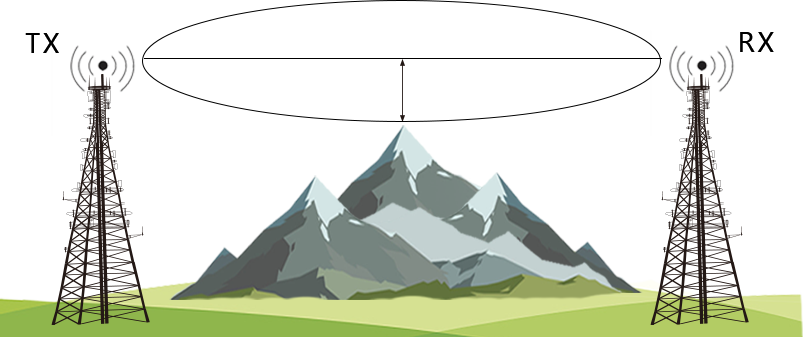
Fresnel Zone
- Fresnel Zone Radius: (m)
- 80% Clearance Radius: (m)
Fresnel Zone Definition
Definition
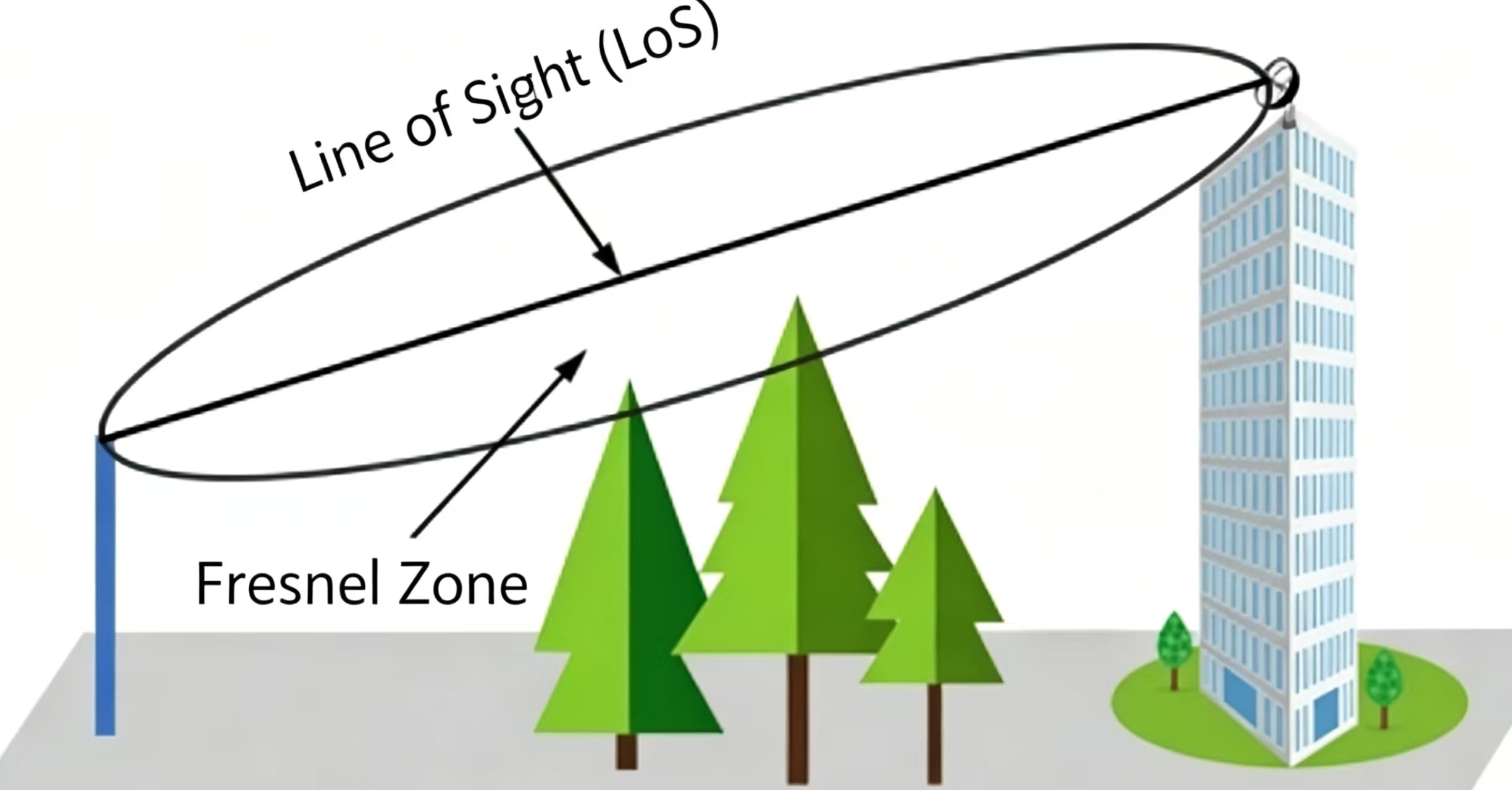
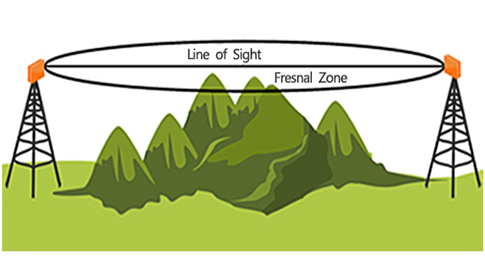
The Fresnel zone is an ellipsoidal region between the transmitting and receiving antennas, formed by points where the path length difference between the direct path and the reflected path equals nλ/2. The first Fresnel zone (n=1) is the primary contributor to signal strength and is also known as the effective zone.
Clearance Requirements
When hard objects intrude into the Fresnel zone signal path, sharp-edge diffraction causes partial signal deflection, resulting in delayed arrival at the receiving antenna. These deflected signals have a phase difference with the direct signal, reducing or even canceling the received power. If "soft" objects such as trees enter the Fresnel zone, they attenuate the passing signal (reducing its strength).
The unobstructed area should occupy more than 60% of the entire Fresnel zone to ensure effective wireless transmission.
Link Budget Calculator
- Free Space Path Loss: (dB)
- Received Signal Level: (dBm)
- Link Margin: (dB)